
How Lego is building the next generation of engineers
/https://tf-cmsv2-smithsonianmag-media.s3.amazonaws.com/filer/Block-Party-Lego-Mindstorms-EV3-631.jpg)
Q Branch is of course the branch of Her Majesty's Secret Service (MI6) that provides James Bond with imaginative gadgets. MI6's headquarters is a ziggurat-like fortress known within the intelligence community as Legoland. It gets its name from the toy company that has supplied the Earth with more than 600 billion tiny plastic bricks – about 80 for every inhabitant. The Lego company's own headquarters is an unassuming campus, as neat and orderly as a quadratic equation. Huge colored bricks – a corporate nod to art – are spread out in neat stacks, and simple rectangular buildings bear names like Idea House and Head Office.
Lego's own MI6, the top secret R&D lab, is located on the second floor of a boring brick building called the Tech Building. Inside, gearheads in jeans and fleece sweaters are surrounded by enough electronic ganglia to give Frankenstein's monster a running start. Amid a spaghetti of wires and a glow of red, green, blue, yellow and purple blocks is an astonishing array of robot prototypes, all capable of annoying behavior. Some of these wonders move on Lego wheels; others scurry around on Lego legs. There's a scorpion-like robot that turns sharply, snaps its claws and searches for an infrared beacon 'bug'. There's a Mohawked android that throws little red balls as he rumbles. And there's a robot snake with fangs that, with the wave of a smartphone, shakes, rattles and rolls. Hang your cell in front of the snake's head and it will come towards you to bite you. All three gadgets are characters from Mindstorms EV3, the latest update to a DIY kit that allows novice Edisons to assemble robots, on PCs and Macs can be programmed and controlled via Bluetooth, downloadable apps and voice commands. Like any other Lego, Mindstorms EV3 is a jumble of parts (nearly 600 individual elements) that can be put together in many ways. The toy, which costs $350 and will hit stores this fall, comes with interactive 3D building instructions for 17 different bots that walk, talk and stalk. And because this is Lego, enterprising kids are encouraged to hack and transform the components into whatever they can imagine.
There was a time when teachers did not have the resources to enthuse and involve students in technology. And the technological knowledge required to assemble a vibrating robot limited the audience to high school and college students. That all changed in 1998 when Lego launched its first wave of programmable bots. By the second wave, in 2006, the programming language had become visual and kids could make bots do almost anything by simply stringing together directives on a computer. “Today, a second grader can make her own wall-avoiding triceratops in 20 minutes,” says Chris Rogers, a professor of mechanical engineering at Tufts University.

With bricks, action, and hues as vibrant as tropical sunsets, Lego created a way for beginners to learn the basics of construction engineering: bracing, tension and compression, loading constraints, building to scale. By combining Lego bricks with sensors, servo motors and microprocessors, these newbies can now explore everything from simple pulleys and belts to computer programming. “Mindstorms EV3 makes tinkering with machines cool again,” says Ralph Hempel, author of Lego Spybiotics Secret Agent Training Manual. Mindstorms encourages young tinkerers to learn their way into robotics through play. “It puts no limits on your fantasies,” says Niels Pugholm, a Danish student who has been playing with Legos since he was old enough to know not to swallow them. “Most toys tell a story in advance; Mindstorms is exploratory and has no fixed rules. If I build a Mars rover robot, I can convert it into a robotic arm and then into a robotic humanoid. Lego robotics is a sneaky educational way to learn about design, planning, construction and, most importantly, reconstruction.” In Denmark, he says, it is mandatory for a child to build a Babel Tower from Lego, which is "inevitably demolished."
The EV3 is the third generation of demolitionable Mindstorms, and the second to be crowdsourced. “The power of many,” says Marc-André Bazergui, one of dozens of Lego citizen developers – who call themselves the 12 Monkeys – tasked with designing the latest edition. Over the years, many have created Lego bots that solve Rubik's Cubes, sort M&Ms by color and convert conventional toilets into robo-flushers.
As part of the so-called 'maker movement', Mindstorms' avid online community shares ideas by uploading plans for new creations to Lego forums and posting videos to YouTube. All over the world, schoolchildren participate in competitions and hold tournaments that challenge teams to design, build and program a Lego robot to perform a specific task related to a theme such as climate control or transportation safety. In the United States, competitions are organized by FIRST (For Inspiration and Recognition of Science and Technology), a non-profit organization founded by the seemingly inexhaustible inventor Dean Kamen (creator of the Segway scooter). Each spring, FIRST hosts championships in four robotics divisions ranging from ages 6 to 18. This year's three-day Lego block party at the Edward Jones Dome in St. Louis featured 650 teams competing for robot superiority and more than $16 million in college scholarships for 140 teams. colleges.
Half of all high schools in the United States and about a quarter of all elementary and middle schools have incorporated Mindstorms into their curricula. The Massachusetts Institute of Technology has a Lego Chair, not a Chesterfield made of Lego blocks, but an endowed professorship in the university's media lab. At Tufts, the robotics kits have spawned an equal number of dissertations and papers with catchy titles like "Teaching Fundamental Cardiovascular Mechanics with Lego Models: A High School Case Study."

Rogers worked with Lego to develop Robolab – a robotic approach to learning science and math – which is used in some 50,000 schools around the world and has been translated into 15 languages. He emphasizes design thinking, the idea that you identify a problem by first proposing its solution. His approach is based on demonstration, criticism and iteration: everything can be improved, even failures. “The children make an educated guess and then conduct experiments to prove their theories,” he says. “They see that there is no right or wrong answer, just an infinite number of ways to tackle a problem. Learning is as important for technology as it is for life.” In Danish, Lego is pronounced LEE-go. In English, the building craze that has gripped the civilized world is pronounced LEEgoMAINia. An Italian artist has painstakingly recreated the works of old masters in Lego, including Da Vinci's Mona Lisa and Vermeer's Girl with a Pearl Earring. A Chicago artist has designed Lego mini sets of the White House, the Sydney Opera House and 15 other prominent buildings. Others have gone to great lengths to assemble the world's largest Lego bridge (35 metres), the world's longest Lego train track (1,500 metres) and the world's tallest Lego tower (450,000 bricks). It would take 40 billion eight-stud Lego bricks to build a stack to the moon, although no one has tried this yet.
Not only does every major new NASA spacecraft and mission now get its own Lego model, but astronauts aboard the International Space Station have also built them in orbit. There are Lego Darth Vader clocks, Lego Ninjago video games and a Lego Quidditch match. In a year's time, the animated adventure film LEGO: The Piece of Resistance will be released in theaters. Featuring characters voiced by Will Ferrell and Morgan Freeman, the cartoon promises to be a real, ahem, blockbuster. At last count, four of the top ten children's books on the New York Times bestseller list came from Lego. One of them, The Lego Ideas Book, carries the slogan 'Unlock Your Imagination'.
Imagination is what has guided Lego since its founding in 1932 by Ole Kirk Kristiansen, a Geppetto-like carpenter with a small workshop in Billund, a rural hamlet in Jutland with the topography of a pancake. In an effort to beat the Great Depression, Kristiansen began making brightly colored wooden cars and pull ducks. After concluding that his toy company needed a more evocative name than Billund Maskinsnedkeri, he shortened the phrase leg godt, Danish for "play well." Lego happens to mean “I put together” in Latin.
Lego, as it is understood by most adults, began in 1949, shortly after Kristiansen purchased Denmark's first injection molding machine and began producing toys with some plastic parts. Lego legend has it that he came across some hollow, British-made blocks called Kiddicraft, which inspired his own Automatic Binding Bricks, the precursor to the Lego brick. The design breakthrough was a stud-and-tube mechanism that allowed the bricks to snap together, stay stuck, and yet somehow easily fall apart. “Lego is the ultimate symbol of the Danish character,” says Niels Pugholm. “They are modest little objects that depend on logic and geometry. Perhaps because Denmark has so few natural resources, ingenuity is cherished.”
In 1958 – the year of Kristiansen's death – Lego patented its click-fit technology, which the company calls "clutch force." The key is precision engineering; the tolerance of Lego's Danish modern teeth is one-fiftieth of a millimeter, ten times finer than a human hair. Over the next half century, Lego became one of the world's most beloved toys. About half of the parents on the planet have been woken up in the middle of the night by a disturbance, groggily rushed into their child's bedroom, and stepped on a Lego brick with their bare feet.
“Children are wonderful little creatures,” says Mads Nipper, the company's chief marketing officer. “Next to drunk people, they are the only truly honest people on earth.” As the millennium approached, Lego exploited that honesty by creating a branding bender. The family business made forays into children's clothing, baby products, jewelry, video games and theme parks. But something was rotting in the state of Denmark. By 2004, Lego had made some stupid financial decisions and was on the brink of bankruptcy or a takeover by Mattel, the world's largest toy retailer. Kjeld Kirk Kristiansen, CEO and grandson of the founder, has appointed former management consultant Jorgen Vig Knudstorp to replace him and rebuild Lego brick by brick. What Knudstorp did: cut costs, lay off staff, halve development times, eliminate the software division and scale back product lines. Seemingly relegated to the Great Toy Attic in the Sky, Lego made a remarkable turnaround.
One line that Knudstorp left untouched was Mindstorms, which started 15 years ago in collaboration with the MIT Media Lab. “The original patent on our interlocking brick expired in 1975,” says Nipper. “The only way to continue to differentiate ourselves from our competitors was through creativity.” And not necessarily Lego's own creativity: the company has outsourced Mindstorms innovation to its hardcore fanbase.
The relationship between Mindstorms and its enthusiasts had always been symbiotic. A few months after the robotics kit's debut in 1998, Stanford University graduate student Kekoa Proudfoot reverse-engineered his own microprocessors and posted the design secrets. Other hackers took advantage of his findings, designing new software and operating systems and sharing performance improvements with the rest of the Internet. As Lego's management and legal team discussed how to handle the breach, Nipper suggested the company should encourage open sourcing.
Suing the Modders, he reasoned, could alienate Lego's adult hobbyists, who accounted for nearly half of Mindstorms' sales and were essentially willing to work for free. In the company's new business paradigm, development must be fan-driven and controlled, with very little oversight from Lego. So little that there was a 'right to hack' written into the Mindstorms software license. “We realized that limiting creativity is the opposite of our mission,” Nipper says. “Our goal is to promote research and ingenuity.” The strategy paid off: Mindstorms became the best-selling product in Lego history.
In 2005, when the kit needed a design upgrade, Lego scoured online forums and websites for adult fanboys willing to be part of a Mindstorms User Panel, or MUP. The four finalists – all sworn to secrecy – and Lego's engineering brains exchanged emails for 11 months about everything from firmware to input ports. In exchange for their contributions, the MUPpets were paid in Lego. “It's the best possible relationship,” said panelist Ralph Hempel, a professional engineer who specializes in embedded systems design. “Money would complicate the issue. There is no other brand in the world that I would consider doing the same work for for free. Obtaining copies of robotics kits in advance is the icing on the cake for me.”
For the latest version of Mindstorms, Lego has expanded its user panel to a dozen brickheads (the 12 monkeys) and investigated how children interact with robot toys. Camilla Bottke, the company's senior marketing manager, says children see robots less as objects than as extensions of themselves, as things with character and personalities. “I think that's a great concept, until the child has to build and program the robot,” says Hempel. “That's when the reality sinks in of how much thinking and tinkering it takes to make a design work.”
“You say you want a revolution,” sang a skeptical John Lennon. “Well, you know, we all want to change the world.” The problem with the digital revolution, Dean Kamen reiterates, is that the ability to play with technology is often confused with the ability to understand it.
The 62-year-old engineer and entrepreneur lives in a hexagonal house of his own design on the outskirts of Manchester, New Hampshire. He's wearing what's pretty much his uniform: an open-neck, button-up denim shirt and jeans.
Kamen dropped out of college to develop the world's first wearable insulin pump. He then created the Segway; a self-balancing robot wheelchair with six wheels that can go up and down stairs; and an electric generator that can run on cow manure and also produce drinking water. Of all his inventions – and Kamen has 441 foreign and domestic patents – the one he is most proud of is FIRST, a largely mental sport based on competitive robotics.
He started FIRST in 1989 to demystify technology and grow a generation of innovators. “Too many high school students in this country, especially women and minorities, are dropping out of science and math classes,” he says. “There is no incentive, no encouragement.” He argues that there are all kinds of subtle obstacles and discouragements. “Children need access to challenging, practical projects that result in a tangible product. Instead of telling them why abstract concepts like algebra or trigonometry are important, science teachers should say, "Let's build a Lego robot!" With a little help, the kids build one and it solves a problem. Suddenly they realize that math and science are very powerful tools. Suddenly math and science are relevant and fun.”
Kamen envisions a time when young people will have as much respect for pioneering scientists as they do, for example, NBA superstars. “The only thing American culture celebrates is sports heroes,” he says. “A lot of athletic teenagers think they're going to make a fortune by bouncing a basketball and becoming the next LeBron James. That's not realistic for even the smallest percentage of them. Become an engineer.” Still, Kamen admits that the innate differences between classrooms and playing fields have helped make careers in sports more attractive than careers in technology. “When athletes work together, it's called teamwork,” he says. “When you work together in science class, it's called cheating.”
The Robotics Competition – the FIRST equivalent of the major competitions – begins each January, when a committee of engineers unveils that year's game and rules. Under the supervision of engineers, scientists or other adult mentors, teams of high school students have six weeks to design and build small, inelegant machines from kits. The only limitations are weight (the robot cannot weigh more than 150 pounds) and cost. (To mitigate economic, rather than technical, benefits, Kamen has instituted a sort of $4,000 salary cap for extra parts.)
Although each team faces the same challenge, they come up with vastly different design solutions. Local winners will advance to one of 58 regional competitions, where their bots will compete for the chance to qualify for the finals in St. Louis. The championship is structured like March Madness, the NCAA Men's Division I basketball tournament. Kamen calls it the “NCAA of smarts.” Each of the four divisions is named after a famous scientist (Archimedes, Curie, Galileo and Newton). The Final Four will be played at Einstein Field.
A recent study from Brandeis University found that children who participate in robotics competitions are more than twice as likely to pursue a career in science and technology, and almost four times as likely to pursue one in engineering. “The robot is just a vehicle,” Kamen says. “You cannot give a child meaningful training in robotics, technology or engineering in six weeks. But by building robots you can build self-confidence and gain a serious understanding of what life is like for people who work on and solve complex problems. For many children, robotics has the potential to change what they spend their time and attention on.”
On this particular January afternoon, about 750 kids, from as far away as Singapore, are devoting their time and attention to a FIRST tournament at the University of Delaware. A cross between a science fair and a "Big Bang Theory" costume ball, it is one of the largest one-day robotics events in the country. The participants are decked out as mad scientists, crash test dummies and all kinds of grotesque questions that even Dr. Seuss wouldn't have made it up.
Tinkertoy technology has transformed a field house into a true hardware empire. Workshop cubicles are cluttered with tan ratchets and rusty keys; wide gray clusters of wheels, pulleys and extension arms; and everywhere, everywhere Lego. Banners feature team names such as Bricktastic Builders, the Fellowship of the Brick, Lego-Nardo da Vinci.
On the Robotics Competition playing field, the most notable confederate – a quartet of New Jersey boys known as the Carbonauts – is dressed in goggles, running shoes and what appears to be orange prison jumpsuits. “Lego inspires me and brings me back to reality,” says Ibrahim Elshahawi, a high school student planning a career in biomedical engineering. “I learned that I can't just build a robot. My ideas need to be more organized and sequential.”
About half of the younger participants are women. In the Robotics Competition there are very few girls. “Girls are more into aesthetics, logistics and detail-oriented,” says a Carbonaut named Charles Verhoog. “We don't like style points.”
“Guys love to break things,” says teammate CJ Geering.
A teenage girl from another team – her pink locks braided with Chinese finger clips – pokes her head into the Carbonau group and shouts, "You'd be surprised."
A buzzer sounds. Urged on in the stands by cheering sections and hyperventilating parents, the teams set their folk lift-like robots in motion on the course. The goal: to rip rubber rings from a vertical pile and place them on horizontal spokes. The Carbonau bot grabs, drops, hangs, slams into walls and yet... somehow wins the heat.
Like a worn-out stock car, the triumphant bot is rolled back to the 'pits', where the Carbonauts monkey with the algorithm, changing the speed and directional variables. When asked if he has ever competed in a tournament tainted by a robot doping scandal, teammate CJ Geering says dryly: “The judges occasionally ask us for electricity samples, but so far none of us have been infected. The last thing we want is to appear on a TV special with Oprah.”
Across a partition, Austin Hwa and Thomas McClure, dressed in crimson scarves, chef's hats and chef's jackets, sit next to a pyramid of Lego bricks. They are members of Chef-Bot-Ardees, a mostly high school contingent from Chadds Ford, Pennsylvania.
-

How can you help your child sleep better? The LEGO professor is happy to give you tips
READ MORE -

What is "LEGO SNOT". Part 1 of the 2TTOYS course "learning to build with LEGO"
READ MORE -

This is the real reason why LEGO Star Wars designers hide pink bricks in sets
READ MORE -

Do you remember these vintage LEGO® sets from your childhood?
READ MORE


LATEST LEGO SETS
-
LEGO 3-in-1 dieren op wielen 10448 DUPLO
Regular price €29,99 EURRegular price€34,99 EURSale price €29,99 EURSale -
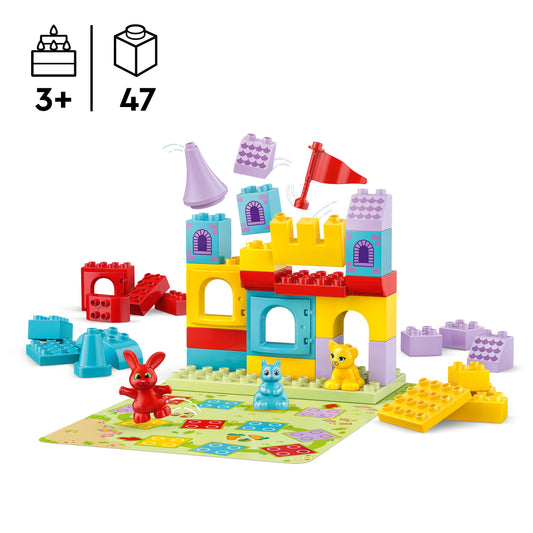
LEGO Hopsy's kasteelspel 10450 DUPLO
Regular price €33,99 EURRegular price€39,99 EURSale price €33,99 EURSale -
LEGO McQueens bezoek aan Docs garage 10456 DUPLO
Regular price €25,99 EURRegular price€29,99 EURSale price €25,99 EURSale -
LEGO De tuin en kas van Opa Big 10461 Peppa Pig
Regular price €67,99 EURRegular price€79,99 EURSale price €67,99 EURSale -
LEGO Minnie's huisdierenhotel 43274 Disney
Regular price €33,99 EURRegular price -
LEGO Centraal Station 60469 City
Regular price €76,99 EURRegular price -
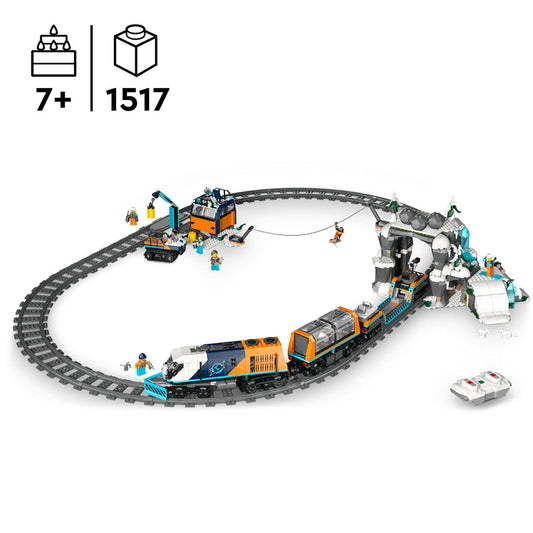
LEGO Arctic Explorer Polar Express Trein 60470 City
Regular price €169,99 EURRegular price -
LEGO Nachtmerrie haaienonderzeeër 71500 Dreamzzz
Regular price €125,99 EURRegular price -
LEGO Arins Spinjitzu strijdmecha 71839 Ninjago
Regular price €17,99 EURRegular price -
LEGO Rontu de Meesterdraak 71842 Ninjago
Regular price €39,99 EURRegular price -
LEGO Ninja strijdvoertuig 71844 Ninjago
Regular price €76,99 EURRegular price -
LEGO De vuurriddermecha 71846 Ninjago (Pre-Order: juni)
Regular price €101,99 EURRegular price -
LEGO Plo Koons Jedi Starfighter™ microfighter 75400 StarWars
Regular price €12,74 EURRegular price€14,99 EURSale price €12,74 EURSale -
LEGO 77241 (Pre-Order: March 2025)
Regular price €25,99 EURRegular price -
LEGO 77241 (Pre-Order: March 2025)
Regular price €42,99 EURRegular price -
LEGO 77241 (Pre-Order: March 2025)
Regular price €84,99 EURRegular price -
LEGO 77241 (Pre-Order: March 2025)
Regular price €224,99 EURRegular price -
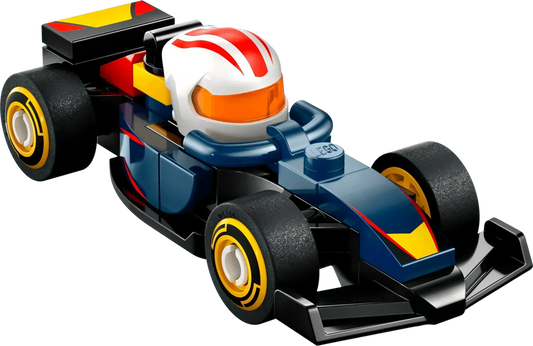
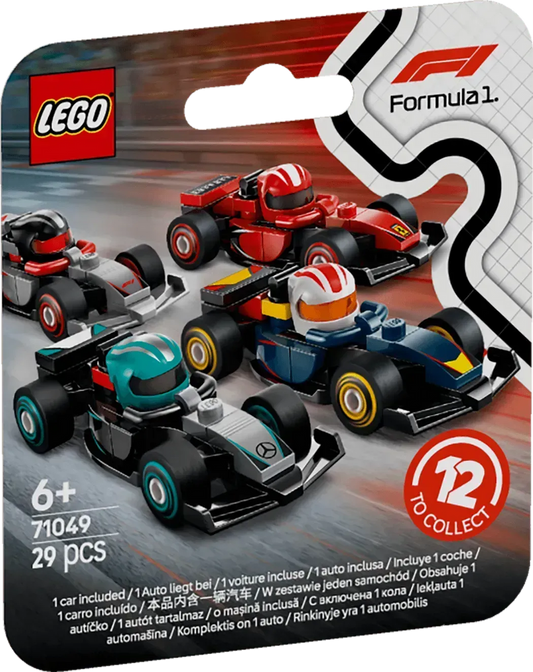
LEGO Formula 1 Drivers with their Car 71049 Minifigures (Set 12 Pieces)
Regular price €54,99 EURRegular price -
LEGO Formula 1 Drivers with their Car 71049 Minifigures (Set 12 Pieces)
Regular price €4,49 EURRegular price -
LEGO Formula 1 Drivers with their Car 71049 Minifigures (Set 12 Pieces)
Regular price €4,49 EURRegular price -
LEGO Formula 1 Drivers with their Car 71049 Minifigures (Set 12 Pieces)
Regular price €4,49 EURRegular price -
LEGO Formula 1 Drivers with their Car 71049 Minifigures (Set 12 Pieces)
Regular price €4,49 EURRegular price -
LEGO Formula 1 Drivers with their Car 71049 Minifigures (Set 12 Pieces)
Regular price €4,49 EURRegular price -
LEGO Formula 1 Drivers with their Car 71049 Minifigures (Set 12 Pieces)
Regular price €4,49 EURRegular price -
LEGO 77241 (Pre-Order: March 2025)
Regular price €84,99 EURRegular price€99,99 EURSale price €84,99 EURSale











SELECTED FOR YOU
-
LEGO 21062 (Pre-Order: March 2025)
Regular price €135,99 EURRegular price -
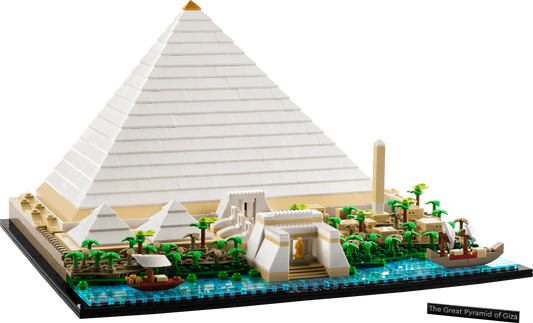
LEGO Pyramid of Giza 21058 Architecture
Regular price €118,99 EURRegular price -
LEGO Build your own Architecture buildings with this set Studio 21050 Architecture
Regular price €449,99 EURRegular price -
LEGO Statue of Liberty 21042 Architecture
Regular price €84,99 EURRegular price -
LEGO Trafalgar Square London 21045 Architecture
Regular price €99,99 EURRegular price -
LEGO Himeji Castle 21060 Architecture
Regular price €135,99 EURRegular price







-

LEGO Avatar
LEGO Avatar: Dive into the wonderful world of Pandora! Build with Jake...
-

LEGO Icons
Relive your childhood with LEGO Icons sets, specially designed for nostalgic adults....
-

LEGO Classic
Discover endless building fun with LEGO Classic sets! This collection offers a...


